تجربه را سفر کنین
Travel the experience
Chalabi Oghli
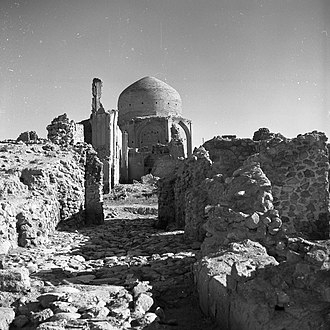
The Chalabi Oghlu Tomb is located 500 meters southwest of Soltaniyeh, on the Soltaniyeh-Khodabandeh road. Some archaeologists and researchers have attributed this complex to Sultan Chalabi, a mystic who was a supporter of Rumi, and have stated that the construction date of the building was 728 AH. This building was registered as one of the national monuments of Iran under the name "Chalabi Oghlu Tomb" on 15 Dey 1310 with registration number 167.
The tomb building
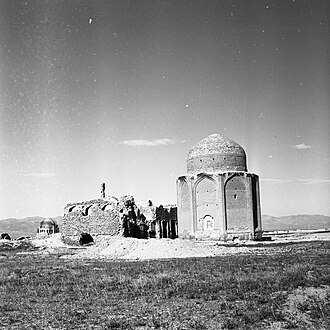
This building was built by the famous disciple of Jalal al-Din Rumi; nicknamed Rumi, one of the greatest sages and mystics of Iran; in the 8th century (A.H.). The height of this building is 16 meters and the diameter of its opening is 6 meters. Chalabi Oghlu died of illness in 716 AH. This building is the 167th historical monument registered on the list of national monuments of Iran.
Introduction to the sections
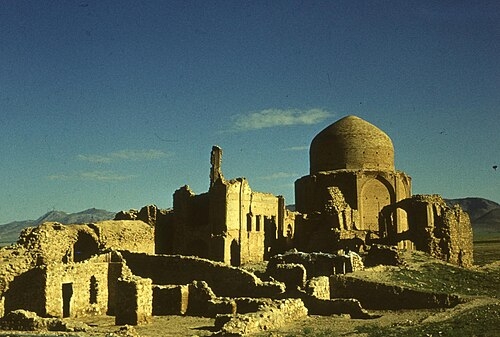
This complex consists of two sections: the monastery and the tomb. The monastery includes a central courtyard and rooms are located on the western and eastern sides of it. The architectural plan of this complex was designed with inspiration from Sufi beliefs and orders, and each of the spaces was implemented with a specific function.
First section
The first unit in the entrance area was dedicated to the rank of the poor, while the Taliban of Paradise, the next rank of this sect, were located in the corners of the entrance area. The individual cells of the central courtyard, with short doors, formed the place of asceticism of the disciples according to their ranks. The courtyard of the monastery was a place of collective hearing, with the Sultan in the middle and the disciples forming a circle around it, thus establishing a circle of remembrance. The southern units of the monastery were probably used as educational classes, and the space located on the sides of the southern porch was the place of the winter circle of remembrance. The second floor of the building was severely damaged and collapsed on the sides of the porch, and an element resembling a parapet can be seen around it. The symmetry of the entire complex is fully observed, and the main materials of the building are rubble stones and mortar, and the roof of the chambers and corners are dome-shaped.
Some researchers and archaeologists consider the construction of the Khanqah to be prior to the tomb of Sultan Chalabi, and some of them have announced the date of construction of the tomb to be prior to the Khanqah. One of the most valuable documents that is of great importance in solving the problem of the actual dating of the Khanqah building is the study of the inscription carved on the southern sill of the southern porch. This inscription, written in three pieces, one at the top and two pieces on the sides of the porch, is a reliable document in identifying the city of Soltaniyeh and its details and details.
Part Two
The second part of this historical complex is the tomb known as Sultan Chalabi. The plan of this building is octagonal, and each side of its exterior is 16.4 meters long, 17 meters high, and 5.7 meters long, designed and executed with special beauty. The building was first built with three rows of carved green stone, in which less durable sandstone stones were used, and then brickwork was applied with a beautiful style of al-wal-faq and brickwork up to 2.5 meters. The brickwork form in the octagonal arches looks different. After that, the work continued with simple brickwork, and the space between the octagonal arches was designed and implemented with beautiful arches decorated with five and seven narrow arches. Above these arches, a brick dome with a relatively long stem is supported. The octagonal plan was converted into a 16-sided plan by the implementation of the trumpets and then into a circle, and the dome sits on it.
The style of the tomb of Sultan Chalabi in this tomb is of great importance, since this tomb evokes the circle of remembrance of Sufism. This means that the inside of the tomb is divided into a space, where the body of the Sultan is buried in the middle and the bodies of the disciples are placed around it according to their rank and status.
Reconstruction
This structure has been reconstructed in a very beautiful way and the Dervish chambers have been converted into very beautiful hotel rooms along with a restaurant and coffee shop that welcomes domestic and foreign guests in Qonbiyah, Iran.
Address: Soltaniyeh, Soltaniyeh Street, Chalpi Oghli Mausoleum
Comments