تجربه را سفر کنین
Travel the experience
Dash kasan
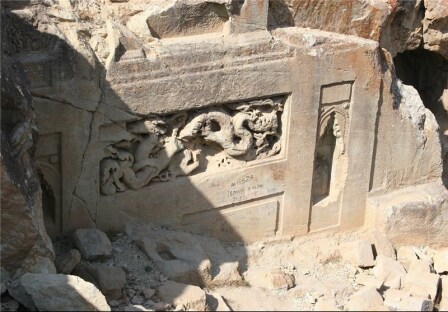
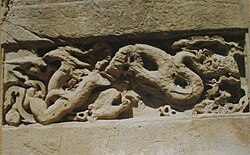
Dashkasan Temple or Dragon Temple is a rock-cut structure located on the outskirts of the village of Vir, about 15 kilometers southeast of the historical city of Soltaniyeh in Zanjan Province. The stone temple of Dashkasan dates back to the Ilkhanid period. This building has two reliefs of dragons and several Islamic altars carved on both sides of it, mirroring each other. These reliefs are among the few dragon motifs in Iran and show the influence of Far Eastern culture (Mongolia and China) in the Ilkhanid era. Some have dated the temple to pre-Islam and believe that during the Ilkhanid era, motifs, including dragons, were added to it.
The formation of this temple began after the death of Arghunshah, with the perseverance of Eljay Khatun, the sister of Sultan Mohammad Khodabandeh, but it was not completed. The remains left at the site strengthen the possibility that the Mongol Ilkhan Arghun had built this temple before converting to Islam.
Not many remains of the original form of this temple remain, and only large, scattered stones can be seen in the corners of the temple. Many of the stones are displayed to visitors in glass-roofed chambers. The area of the Dragon Temple is rectangular and approximately 100 meters by 50 meters, part of which was created by digging into the hill. (Source introduction, Hamshahri Javan, No. 312) There are several dragon statues in this temple.
Name
Dashkasan means stonecutter in Turkish. This work is also sometimes known as the Dragon Temple.
Location
The historical Dashkasan Temple is located to the north of the Soltaniyeh Plain, the old city of Soltaniyeh, the Soltaniyeh Dome, the Çelbioğlu Tomb, and the Mullah Hasan Kashi Tomb, and forms part of the historical cultural axis of Soltaniyeh.
The road to the temple was paved in 2010 and paved in 2019. There are signposts along the way and facilities for spending the night at the historical site. Next to the temple, there is a small hut and a prayer room where the site guard lives.
Dragon and Muqarnas Carvings
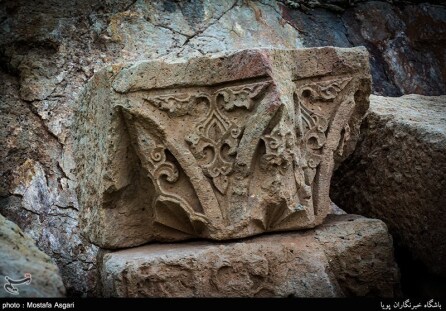
Dragon carvings measuring 5 meters long and 1.5 meters wide are the largest decorative motifs of this temple. There are also delicate Muqarnas carvings on the temple's niches. Islamic motifs with various designs can be seen in the decorations of Dashkasan Temple. Longitudinal symmetry was considered in the construction of this temple, and this symmetry is visible in all parts of the temple.
National Monuments of Iran
The Dash Kesen relief dates back to the Ilkhanid period and is located in Soltaniyeh County, Soltaniyeh District, Vir Village. This work was registered as one of the national monuments of Iran on March 20, 1974 with registration number 1026
Address: Soltaniyeh County, Vir Village, Dash Kesen Temple Road
Comments